Get involved in research
What is getting involved in research?
Getting involved in research means working with researchers to help shape what research gets done, how it is carried out, and how the results are shared. You do not need research experience!
You are helping shape the research as a partner, adviser or contributor.
You may hear people use terms like:
- PPI: Patient and Public Involvement
- PPIE: Patient and Public Involvement and Engagement
- CEI: Community Engagement and Involvement
These terms can sound technical, but the idea is simple. Researchers work with patients, carers, community members and the public so that research is more relevant, inclusive and useful.
The aim is to learn something useful that can improve health and care for people now and in the future.

Hear from Nicki about why you should get involved!
You do not need research experience!
You do not need to be a researcher, doctor, nurse or healthcare professional.
Your lived experience, community knowledge and personal perspective can help researchers understand what matters to people.
You might have experience as:
- A patient
- A carer
- A family member
- A community member
- Someone who uses health or care services
- Someone who supports others in your community
How could I get involved?
There are many ways to get involved. You might:
- Share your views in a meeting
- Help design a research project
- Comment on information given to participants
- Help researchers understand what matters to patients or communities
- Support a funding application
- Help write or review plain-English summaries
- Take part in a steering group
- Contribute to a blog post, event or public discussion
- Carrying out interviews
- Facilitating focus groups
- Doing data analysis
What is health research?
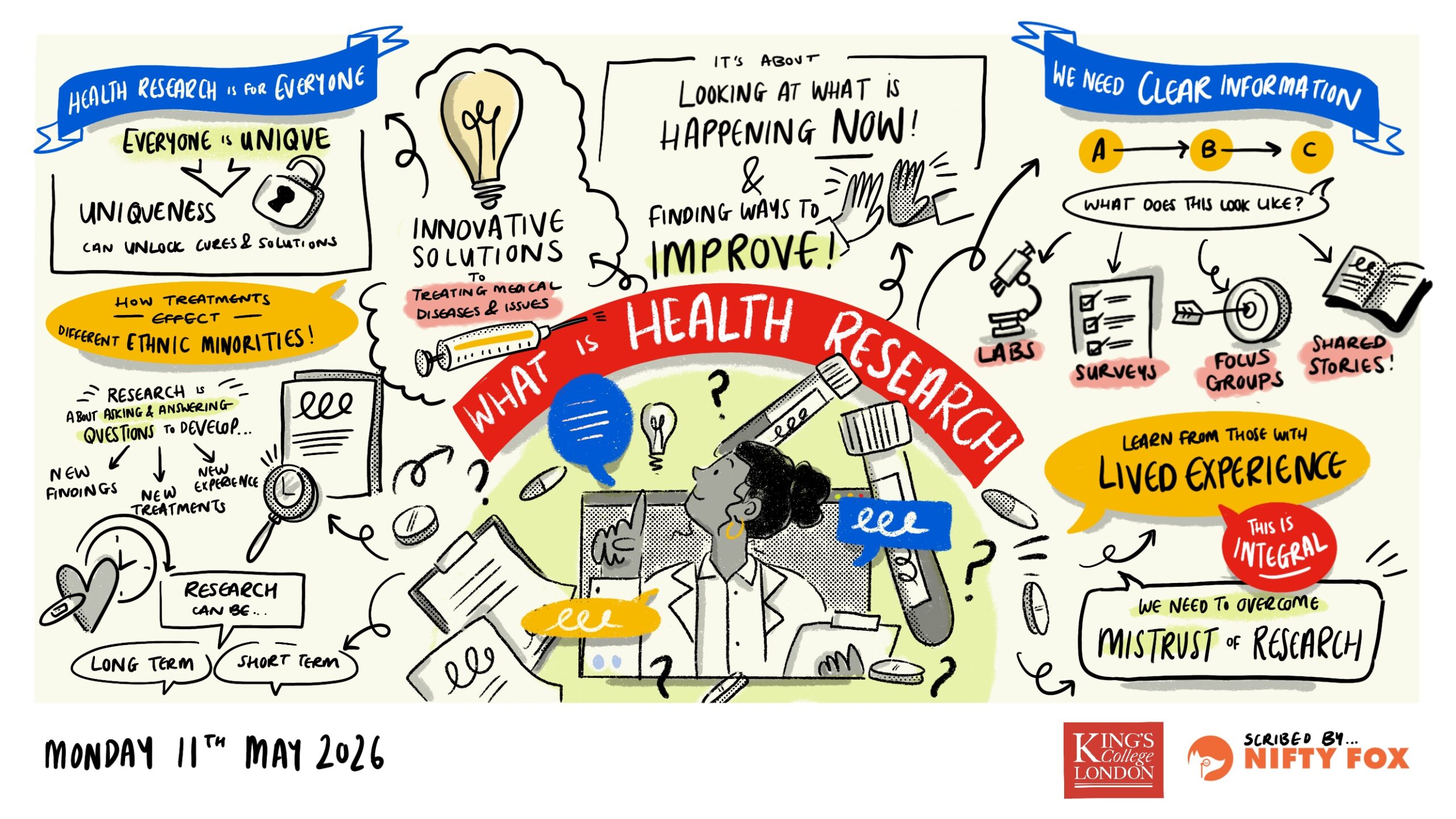
Health research helps us understand health, illness, care and treatment.
It can look at what is happening now, what matters to people, and how health care could be improved.
Health research can include:
- asking questions about health conditions or services
- looking for better ways to prevent, diagnose or treat illness
- improving how people are cared for
- learning from patients, carers and communities
- using surveys, interviews, focus groups, lab work or shared stories
Not all health research involves testing treatments. Some research is about listening, learning and making services, information or future studies better.
Common questions and answers
Will I be tested on?
No. Public involvement is not the same as being tested on.
You are not being treated as a research subject. You are helping shape the research as a partner, adviser or contributor. Each opportunity should clearly explain which type of involvement it is.
A research participant takes part in a study so researchers can collect information or test an idea, treatment or service.
When you get involved in research, you use your lived experience and personal perspective to advise the research team. You might comment on plans, information or questions, or help decide what matters most.
Do I need to make a big commitment?
No. The amount of time you give can vary.
Some opportunities might take one hour. Others might involve regular meetings over months or years.
Researchers should explain in each research involvement opportunity, the following:
- What the role involves
- How much time it may take
- Whether meetings are online or in person
- Whether payment or expenses are available
- What support will be provided
It is always OK to ask questions before deciding.


Will I be paid?
Many research teams and funders encourage payment or reimbursement for public involvement.
This can include payment for your time, travel expenses, childcare or carer costs, depending on the project.
Each opportunity should explain what payment or support is available.
What happens after I express interest?
The exact process may vary, but it often looks something like this.
First, you contact the researcher or complete the sign-up form. The research team will then review expressions of interest and decide who the opportunity is suitable for.
The researcher should let you know whether you have been selected. If you are selected, they will explain what happens next, including the activity, time commitment, support available and whether payment or expenses are offered.
If you are not selected, it does not mean you did anything wrong. Some opportunities only have a small number of places or need people with particular experiences. You may still be able to hear about future opportunities.
Always check the opportunity details before deciding whether to get involved.

Will I make a difference?
Yes. Public involvement can help research:
- Ask better questions
- Focus on issues that matter to people and communities
- Be easier and fairer to take part in
- Use language people understand
- Interpret findings in a more meaningful way
- Share results with the people affected by the research

Will I get training or support?
Yes. You should be given the support, information and training you need to take part in a meaningful way.
This might include an introduction to the project, plain-English explanations of research terms, guidance on what you are being asked to do, and support from the research team before, during and after the activity.
Some opportunities may also offer training to help you build confidence, learn new skills and understand more about public involvement in research. You do not need to be an expert before getting involved.
Each opportunity should explain what training or support is available. If this is not clear, you can ask the researcher before deciding whether to take part.
Research opportunities to get involved with